
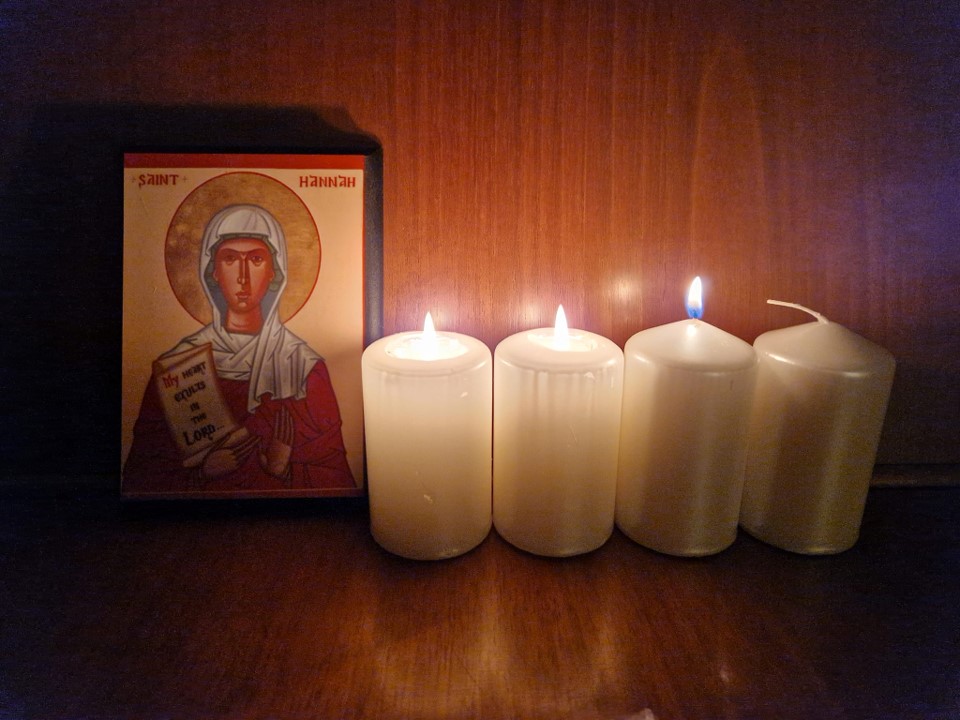
Third Candle: JOY
JOY
Advent 2022
Third Candle
Peninnah had children, but Hannah had none. (1 Samuel 1:2)

Unfair
Though motherhood and the longing for it are central to Hannah’s story, its focal point is something that all people can relate to. At the heart of her story is the question of joy, and how to find it in a world where things are unfair. Let’s face it, no one deserved a child more than Hannah, for she was the first wife and the one her husband wanted. But sadly, after a long stretch of barrenness, a second wife, named Peninnah, was brought in to fill the house with children.
Hannah was the most beloved while her co-wife was the baby machine and, just like Rachel and Leah, things ended up in rivalry. Peninnah would laugh and mock surrounded by sons and daughters, while Hannah would be showered with gifts and comfort from their husband. Then the rivalry spilled over into the worship place; the space where Hannah looked for strength to bear the weight of childlessness.
Whenever Hannah went up to the house of the Lord, her rival provoked her till she wept and would not eat.
Truly, things were not fair for Hannah, and they were also not fair for the co-wife who mocked her. After all, who wants to be married just for their fertility? Peninnah also wanted acceptance, and was working hard to get it. Each, despite their rivalry, was looking for joy, and wondered if it was possible should fairness not come. Could one still have joy if the childlessness continued? And could the other still have joy if the lovelessness would never end?
Despair
While on the road to parenthood my wife and I wondered how we could find joy, and especially after experiencing the unfairness of child loss. We also wrestled with fears that our desire would not be fulfilled, and the questions of joy being possible should childlessness be our fate. Perhaps we could find it by doting more on our pets and renovating a house? Or perhaps we could find it by changing professions and getting new hobbies?
With all of these questions in mind we came to the realization that while knowing its name we could not really define joy. In other words, we did know what we were really searching for. Was it a feeling, a state of mind, or a mystical thing that came from God?
In her deep anguish Hannah prayed to the Lord, weeping bitterly.
Van Jones once said that joy is a decision, while happiness is the byproduct of good circumstances. This decision is choosing to face life with a radical hope that says, “No matter how things turn out for me, what brings despair is not the final word.” For Hannah despair was being childless and barren, which brought women guilt and shame and burdened them with worry. While for Peninnah despair was being unloved and tolerated, which made women work to prove themselves and compete with one another.
Nevertheless, Hannah decided that no matter what the outcome, the things that brought her trouble were not the final word. So after being mocked once more she went back to the sanctuary, and made a vow while sending up a prayer unanswered many times:
Lord Almighty, if you give me a son, then I will give him to You for all the days of his life.
Hallelujah
From the outside joy can seem like a coping mechanism, but it is really a bold declaration in a world that is unfair. It is saying, as Van Jones puts it, “Hallelujah Anyhow!”, with the knowledge that good things and better times will come. Centuries before Christ’ birth, many people did the same, and especially in the times when Israel was conquered. Life was not fair as they faced oppressors like the Babylonians, and the temptation was to give up and live with faithlessness. Nevertheless, there were those such as the prophet Daniel who spoke against despair with a radical hope. These people boldly cried, “Hallelujah Anyhow!”, and declared that captivity was not the final word. Better times were coming with peace and restoration, and out of this they looked forward despite the troubles around them.
During Advent we do like Daniel, Hannah, and others in Israel’s past, and make a bold declaration in an unfair world. There is so much around us today that tempts us to lose heart, but in the beautiful traditions of this season we show a radical hope. Through the candles we light each Sunday we say, “Hallelujah Anyhow!”. Through the calendars with chocolates we say, “Hallelujah Anyhow!” Through songs and carols as say “Hallelujah Anyhow!”
We are looking forward to better things despite the troubles around us. And the greatest of these things is the second coming of Jesus, whose first coming we remember and cherish with joy.
The images featured in this post are by Scotty J. Williams.

We Have Better Stories To Tell: Revitalizing Black Religion
We Have Better Stories To Tell: Revitalizing Black Religion
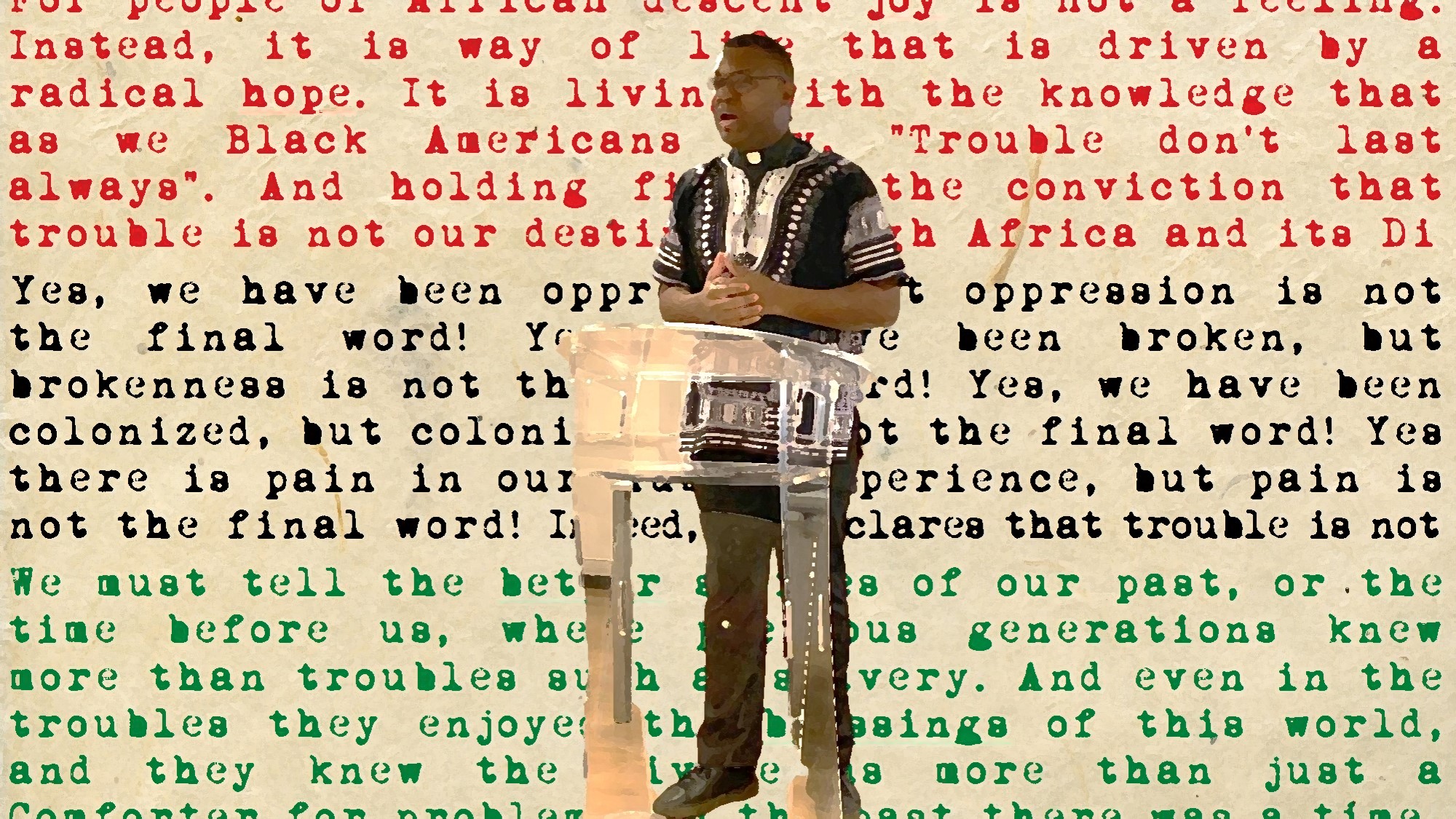
A talk for the United Nations' Permanent Forum on People of African Descent
Geneva, Switzerland - December 4, 2022
On December 4th of 2022, I spoke at the launch of the United Nations’ Permanent Forum on People of African Descent. The subject was revitalizing religion in Africa and its Diaspora by getting away from narratives that only focus on pain and oppression. To read this talk, click on the button below.
The image featured in this post is by Scotty J. Williams.
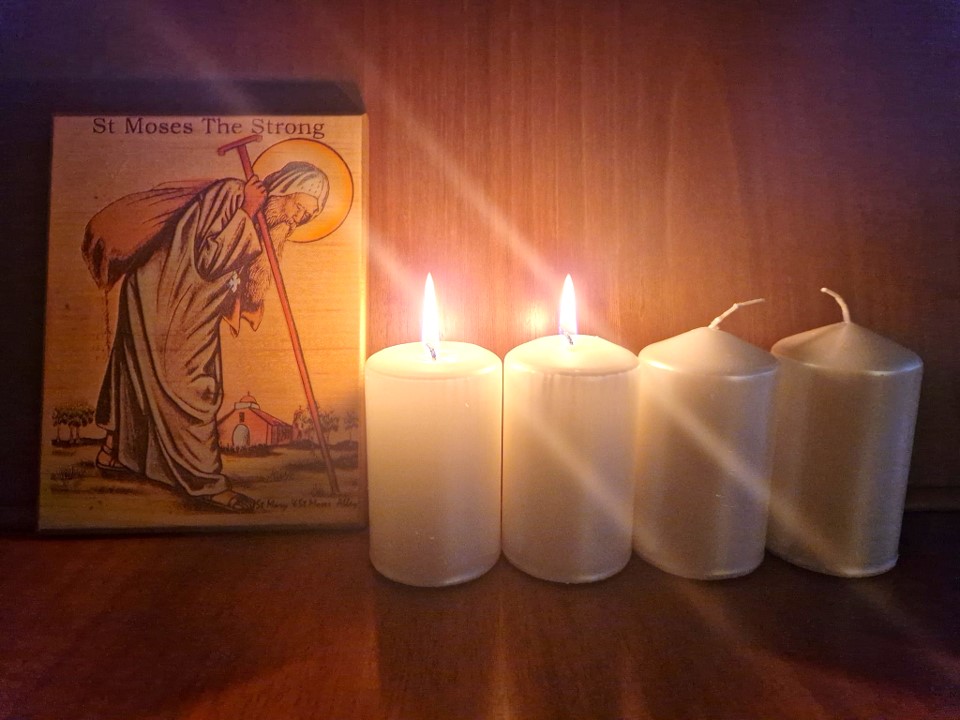
Second Candle: PEACE
PEACE
Advent 2022
Second Candle
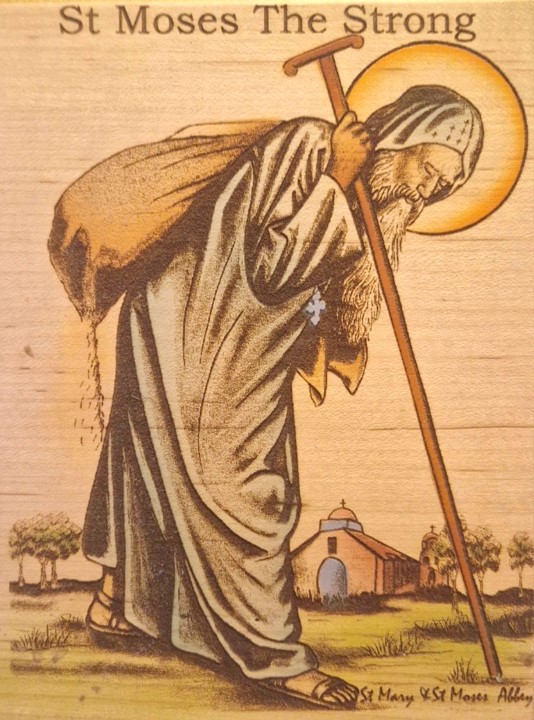
Seeking Peace
In my home there are icons of several great believers, and one of them is the Desert Father Moses the Strong. Moses was an Ethiopian who was born into slavery, and before embracing Christianity he lived a ruthless life. Upon getting his freedom he started a gang of seventy thieves who robbed, raped, killed, and built an awful reputation. In fact, they came to be called the, “Terror of the Nile”, and authorities across Egypt set great bounties for their capture.
Peace is not the absence of trouble.
One day as Moses was on the run from a failed robbery, he hopped the wall of a monastery and hid within a cell. When the monk who lived there found him he welcomed him with blessings, and showed the notorious bandit an open hospitality. Overtime, Moses was touched by the life of the monastery, where everyone seemed to have a purpose and belonged. The monks possessed something that he had been longing and searching for. They had peace, which is more than the absence of trouble.
Finding Peace
Some Christians define peace as the presence of God, but I have learned through my own trials that it is something more earthly. For example, with the loss of my daughter Hope, which I mentioned in the first reflection, God’s presence alone brought little comfort to my wife and I. Don’t get me wrong, the truth of God being with us was a great aid, but it did not take away our feelings of being lost and alone. What took these things away was what Moses saw in the monastery; community and fellowship with the people of God.
Peace is no longer feeling lost and alone.
Community and fellowship gave us a sense of purpose and belonging, and, with the truth of God’s presence, calmed our fears and moved us forward. They also reminded us that trouble doesn’t last always, and that our pain was not permanent and perpetually unbearable. Through community we met fellow believers who had experienced our suffering, and showed us by example that there is life after loss. And through fellowship we experienced tangible support, or works of compassion by fellow believers who wept and mourned with us. Like Moses, we found peace among the people of God, and were able to weather the storm and come out on the other side.
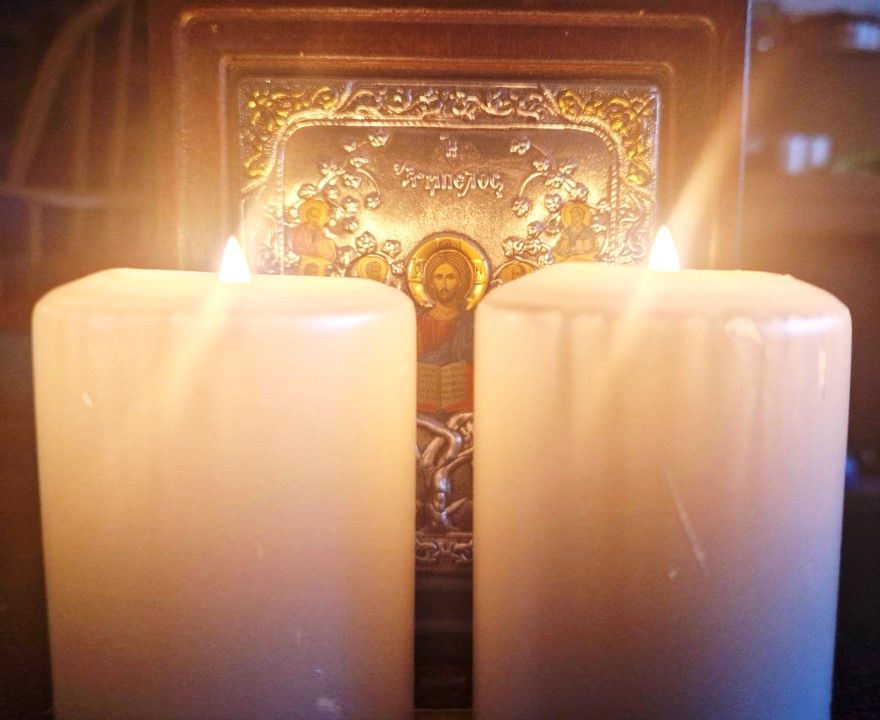
Giving Peace
Along with “Emmanuel”, the presence of God through Jesus, peace is an integral theme at the heart of Advent. Its fingerprints are all over the moments just before Christ’ birth, and moments centuries before it in the days of ancient prophets. Mary and Joseph found community through a family in Bethlehem, who offered them the warmest room, the stable, in their home. Then Isaiah spoke of broken fellowship restored, and people having communion with one another and God.
Indeed, the fingerprints of peace cover the moments leading to Jesus’ birth, and during Advent we are invited by God to let them cover our lives. We are joyfully beckoned to offer community and fellowship to all people, and this includes those that we dislike and deem unworthy. Looking back to the story of Moses, who rightly deserved punishment, the monk saw his need for peace and did not hesitate to meet it. He did not push the robber out and close the door of his cell. Instead, he opened the door of community and with compassion pushed him into fellowship.
What people need and long for the most in our world is peace, and Advent calls us to meet this need whenever we see it. I pray that we would give it to all people as best we can, and in so doing reveal to them the One Whom we await. The One heralded by the Heavenly host that sang,
Glory to God in the highest, and on earth peace…
The images featured in this post are by Scotty J. Williams.
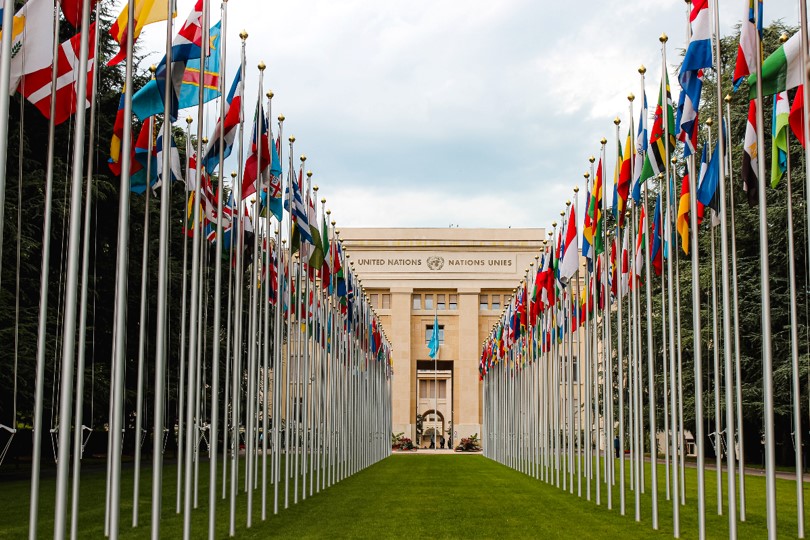
Upcoming Event: Permanent Forum of People of African Descent
Permanent Forum of People of African Descent
United Nations
Geneva-December 4, 2022
On December 4th I will be speaking at an event for the United Nation’s Permanent Forum of People of African Descent. This event is in partnership with the Pan African Women’s Association of Switzerland and focuses on strengthening the link between Africa and its Diaspora. I will be leading a time of prayer and talking to attendees about improving Black religion by moving from it a discourse of pain to a discourse of joy.
To learn more about this even and register, one can attend in person or online, click on the button below.
The image featured in this post is by Mathias Reding of unsplash.com and is free for public use.
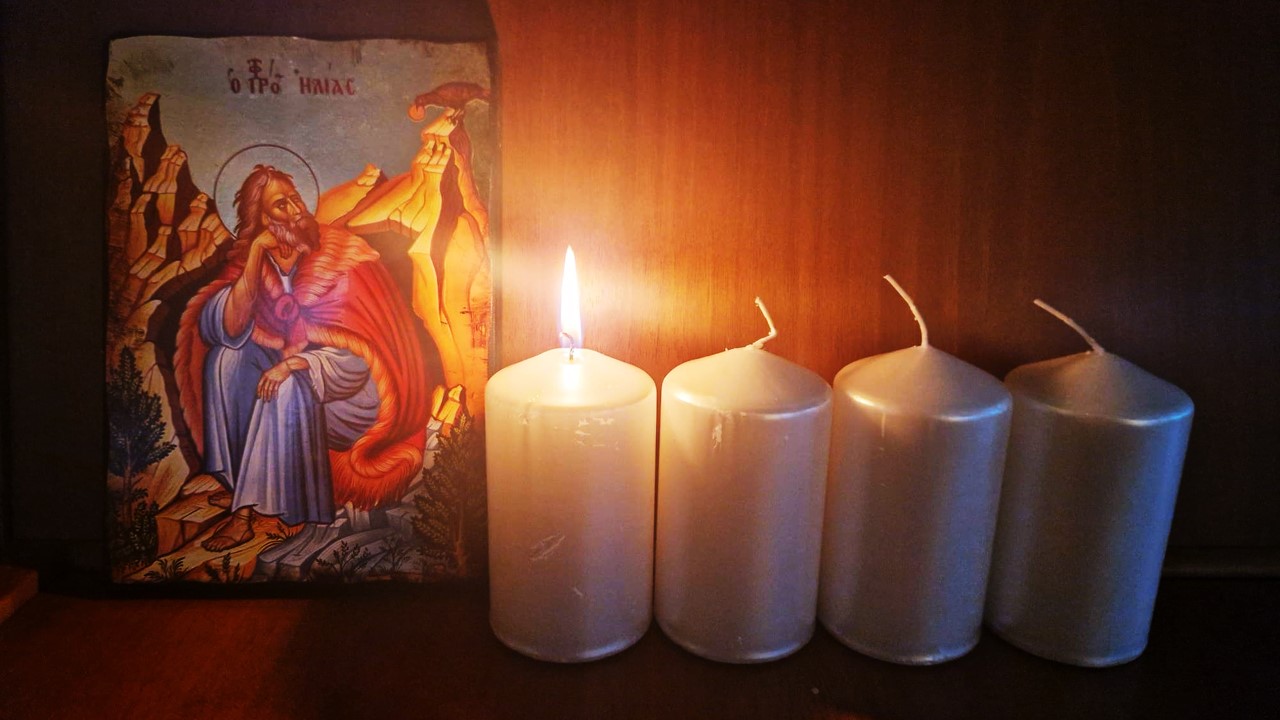
First Candle: HOPE
HOPE
Advent 2022
First Candle
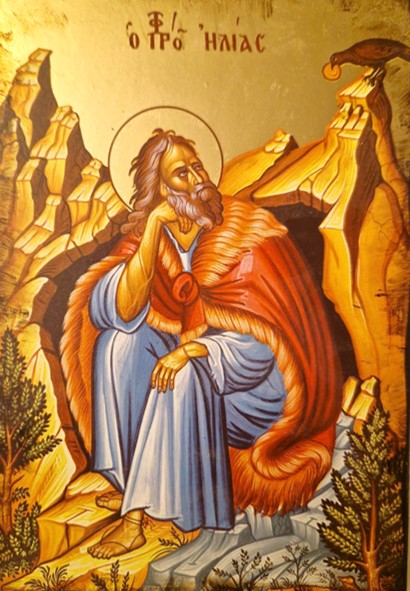
Then Elijah walked for a whole day into the desert. He sat down under a bush and asked to die. (1 Kings 19:4)
Hope Lost
When Elijah asked to die it was not a loss of faith. Instead it was a loss of hope from a host of pressing challenges. Mark Manson defines hope as a need for something to look forward to, and for Elijah the only thing ahead was further disappointment. Before asking God for death he had done daunting tasks; he had stopped the rain, killed the prophets of Baal, and caused the rains to fall again. He wanted Israel’s king to repent and leave idolatry, but the end result was an angry queen and running away to save his life.
In short despite his works, Elijah’s hopes were dashed. There was nothing to look forward to, and all ahead seemed bleak. The horizon had no sun, and would welcome him with darkness. So, with a bleak outlook he asked the Lord to put him out of his misery.
“I have had enough, Lord,” he prayed. “Let me die. I am no better than my ancestors.”
Many of us who live today know Elijah’s feelings all too well, and some of us have even prayed a dismal prayer like his. Though we are not prophets we have worked with great aspirations, and the end result was a disappointment that darkened our horizon.
In 2016 my wife and I faced a dark disappointment, where a child that we were expecting was suddenly lost to us. Our joy from looking forward was quickly exchanged for grief, and our bright outlook was replaced by one that was dark and clouded by pain. Like Elijah our hopes had been dashed leaving us discouraged, and in the wake of a present suffering we felt like giving up. Nevertheless, a need remained for something to look forward to, and this was the heart of the prophet’s prayer while asking God for death.
Hope Restored
Though Elijah’s petition was gloomy, it was really a cry for hope. It was asking for something better to look forward to than troubles that clouded his vision. For him that something better was the freedom and rest of heaven, but God reached out and answered his prayer with the common and ordinary of earth.
Elijah saw near his head a loaf baked over coals and a jar of water, so he ate and drank. Then he went back to sleep. Later the Lord’s angel came to him a second time. The angel touched him and said, “Get up and eat. If you don’t, the journey will be too hard for you.
One Jewish proverb says that worries are best washed down with soup, and I believe that the same is true when hopes are dashed and lost. What restores our hope is the simple gifts that we encounter every day; things that the prophet Elijah received from the angel in the wilderness. His cries were answered with food, drink, and someone’s presence, and this is what awaited him as he slept after receiving them. These common simple things were something to look forward to, and they grounded him, replenished his faith, and strengthened him to carry on.
Hope For Advent
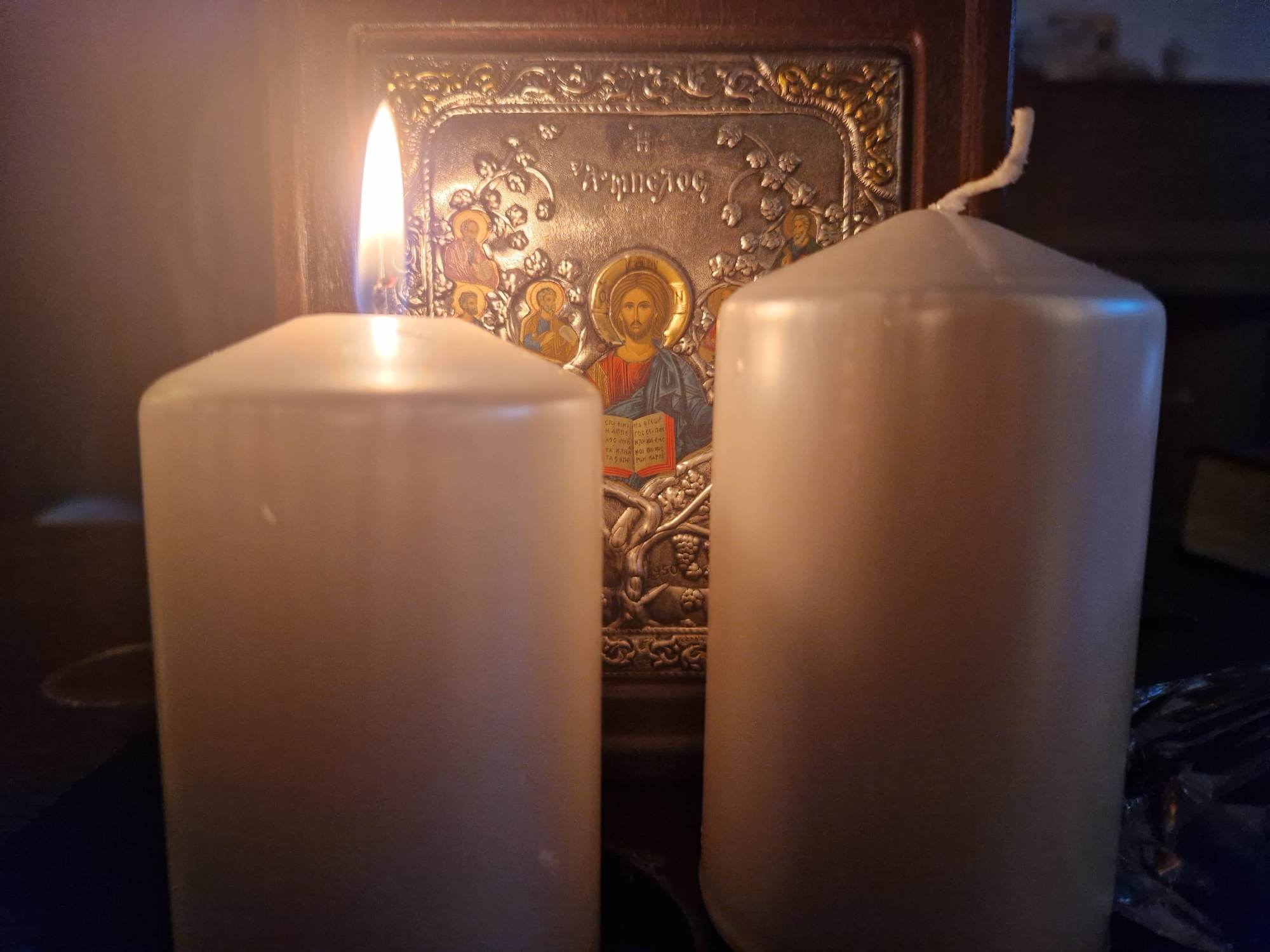
Each year we begin the Advent season by lighting a candle for hope, and seeking relief from troubles in our lives and the world around us. We look forward to something or someone that is better, and that is Christ Whose birth we remember and Whose return we await with joy. Though the wonders of heaven surrounded His birth in Bethlehem, He came to us through the common and ordinary of earth. In fact, He continues to come to us in this way, for we experience Him the most in simple things that we encounter each day.
We experience Jesus through food like the bread we buy or make, and this is the point of the bread we break while celebrating Communion. We experience Jesus through places like our homes, schools, and offices, and this is the point of the sanctuaries we build for worship services. Lastly we experience Him through relationships and community, and this is the point of our gatherings and times of connection and fellowship.
Indeed we meet the Lord through the common and ordinary. Simple things that we look forward to and encounter each day. And during the Advent season we enjoy them with intention, and watch as God restores our hope and gives us a brighter vision. A vision of a world restored by grace and love from heaven, and an outlook that replenishes our faith and strengthens us to carry on.
The images featured in this post are by Scotty J. Williams.

Telling Better Stories: Black Theology from an Inside Perspective
Telling Better Stories: Black Theology from an Inside Perspective
An article for the Zeitschrift für Missionswissenschaft (ZMiss)
2022
Earlier this year I was invited to write an article in English for the Zeitschrift für Missionswissenschaft (ZMiss). This is a Missiology Journal that focuses on Intercultural Theology, and the subject of its 2022 edition is, “Rassismus und Rassismuskritik [Racism and Critiquing Racism]“.
I highly recommend this edition which has some wonderful contributions by theologians working in the areas of racial justice and reconciliation. My contribution is an in-depth introduction to Black American Theology, and the future of Black American religious thought. Here is the abstract.
Black Theology was created to speak to Black Americans as they faced a nihilistic threat from various forms of oppression. It was meant to give them a sense of meaning, hope, and love, through a vision of a God Who was present with them as a co-sufferer and co-celebrant. Nevertheless, the question remains if Black Theology can speak beyond its context, and offer meaning, hope, and love to other groups facing oppression. Furthermore, is it only for the benefit of the oppressed, or can it also be of benefit to those who are oppressors? This article gives an in-depth view of Black theology from an inside perspective, or the view of a Black American theologian whose faith was shaped by it. It explores the African roots, practices, and goals of Black Theology, and also shows how it speaks to freedom struggles beyond its original context. Finally, it shows how Black Theology seeks a dual liberation, or the freedom and transformation of the oppressed and oppressors.
Unfortunately, the article cannot be shared on my website at this time. Nevertheless, those who wish to read it can purchase this year’s edition of ZMiss by clicking on the button below.
The image featured in this post is by Scotty J. Williams.

Timi Will Wake Up
Timi Will Wake Up
A conversation with my son about death and resurrection
Christ the King Sunday 2022
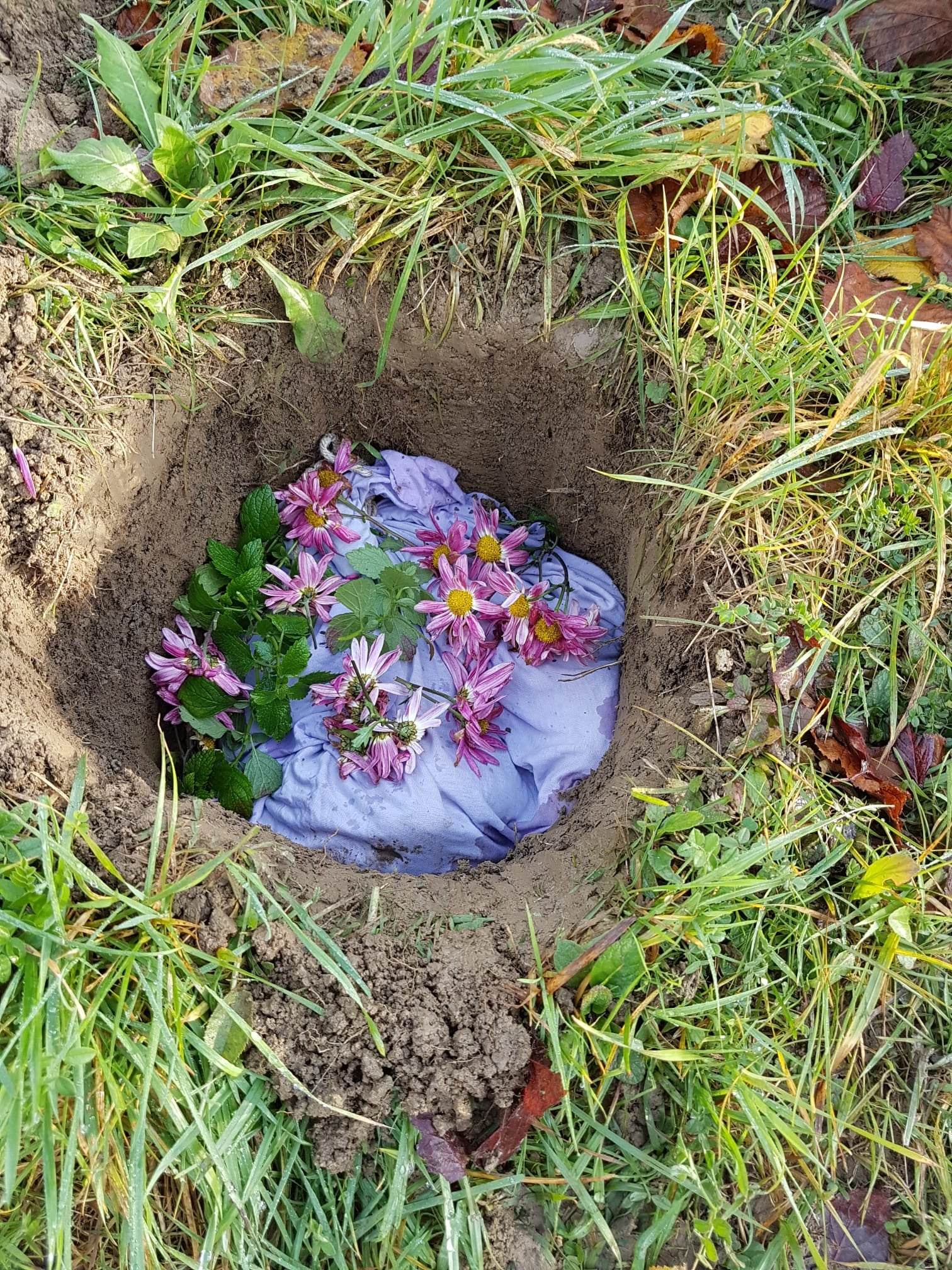
For this year’s Christ the King Sunday I was not scheduled to preach or give a spiritual input. Instead I planned on a nice walk with my son to a castle that we often visit in the countryside. As we approached Schloss Dottenwil he began to speak of Timi, an old cat that his grandparents had buried a few days ago.
Recently Ian has learned about death and had short talks with his mother about it, so I used our walk as an opportunity to help better his understanding. What came about was a delightful dialogue in English and Swiss German that felt like a number of children’s messages that I have given over the years.
Though not a sermon our conversation was a preaching moment, where the reality of death was engaged and the hope of the resurrection was proclaimed. I call it, “Timi Will Wake Up”.
Timi Will Wake Up
IAN: Baba, de Timi esch gstorbe (Timi has died).
ME: Yes, he is gone. Do you miss him?
IAN: [silence with a blank stare]
ME: Who else has died? Can you remember?
IAN: Urgrosspapa, Urgrossmama, Urgrossvati….ond Mr. Caleb, er esch ou gstorbe. (Great-grandpa, Great-grandma, Great-grandpa….and Mr. Caleb, he is also dead).
ME: Yes, they are all dead like Timi. Do you know what that means?
IAN: Hmmm?
ME: It means that they are in a sleep called death. It is like when you take a nap or go to bed at night, but you do not wake up at home.
IAN: Where?
ME: Mama and I think that you wake up where Jesus is. So Timi, Urgrosspapa, Urgrossmama, Urgrossvati, and Mr. Caleb woke up where Jesus is.
IAN: Ok Baba.
We look at a harvested corn field and talk about combines for a few minutes.
ME: Do you know what today is son?
Ian: Nei (No).
ME: It is Christ the King Sunday, Baba’s favorite holiday! Can you say Christ the King?
IAN: Christ the King!
ME: Perfect! And today we celebrate that Jesus is our King! Do you remember what a king is?
IAN: Kindergarten? [one of his books is called, “The King of Kindergarten“]
ME: A king is someone that everybody has to obey. Even Mamas and Babas have to obey.
IAN: WHOW!
ME: So Jesus is our king and everybody has to obey Him. Even Mama and Baba have to obey Him.
IAN: WHOW!
ME: Yep, we do. He is the king of everything, so everything has to obey him.
Ian points to silos, tractors, trees, horses, goats, and houses asking if they have to obey Jesus.
ME: Yes! Everything you see has to obey Jesus.
IAN: Ond s’Güllefass (And the manure taker)?
ME: [laughing] Indeed, that has to obey Jesus too. And you know what else?
IAN: What?
ME: Death has to obey Jesus. And one day Jesus will tell death to let everyone who is gstorbe wake up.
IAN: At home?
ME: Mhmmm. So Timi, Urgrosspapa, Urgrossmama, Urgrossvati, and Mr. Caleb will wake up at home again. Anyone who is gstorbe will wake up.
IAN: [silence with a pondering gaze]
ME: Remember that Jesus is our King, and everything has to obey Him. Ok?
IAN: Ok Baba.
ME: And death has to obey Him.
IAN: Ok Baba.
ME: Who is King?
IAN: Jesus. And Timi will wake up!
ME: Amen!
The images featured in this post are by Barbara Basler.

A prayer for Christ the King Sunday
A Prayer for Christ the King Sunday
2022
Today is Christ the King Sunday where Christians around the world celebrate the true kingship of Jesus as the Sovereign Ruler over all things. It is also the end of another Church year before the season of Advent where we remember the First Coming of Jesus by looking forward to His Second Coming.
Just as those in the Old Testament awaited the arrival of a promised King, we who live today also await His arrival and express our longings with songs of joy. One song that I sing after waking up each Christ the King Sunday is called “Alleluia, Sing To Jesus!” Last year I sang this hymn with uncertainty while closing a Church that deary loved, but this year I sing it with gratitude for where the Lord has brought me since then.
Happy Christ the King Sunday to all, and here is my prayer for this year’s celebration!
O Christ, Who rules all things and Whose name is above every name, we acknowledge You as King and celebrate Your reign with gratitude and joy. Forgive us for taking the scepter and throne that rightly belong to You, and for the many ways that we use power to exalt ourselves instead of serving others. We confess that we are are not the true sovereigns of this world and its nations, but subjects under Your gracious care and called to keep Your law of love. May Your Kingdom be more than an aspiration and idea in our hearts and minds, and more than something mentioned in our songs, sermons, and prayers. May it be a reality displayed in our lives, that draws those we encounter unto You and makes this world better. To You be all blessing and glory, wisdom and thanksgiving, honor and power and might, forever and ever. Amen.
The image featured in this post is by Scotty J. Williams.
Sermon: Le champ de la grâce (Field of grace)
Le champ de la grâce (Field of grace)
A Sermon on the Parable of the Weeds
Espace Bethesda-Auch, France
November 13, 2022
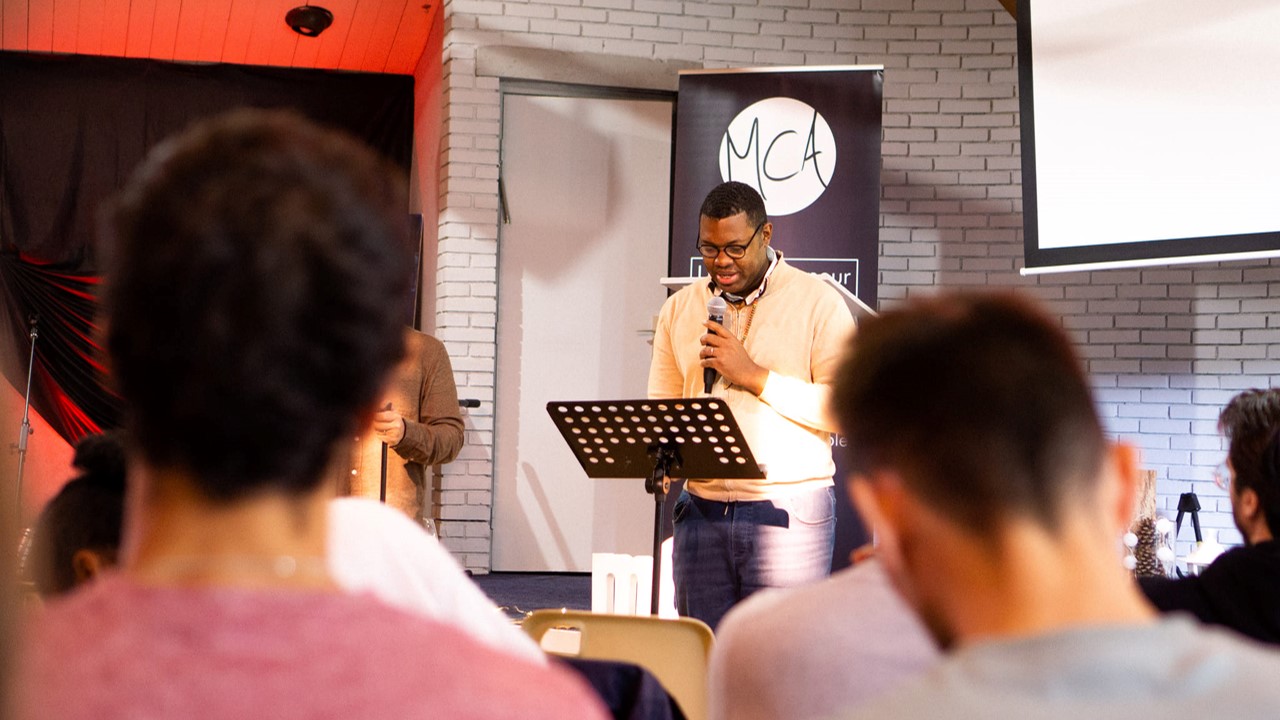
Though Christians are called to protect the Church, they are not called to cleanse it. In this sermon on the Parable of the Weeds I look at how the Church is a mixed field of grace and transformation. Many thanks to the people of Espace Bethesda for inviting me to proclaim God’s Word among and with you.
The image featured in this post is by Valentin Potenti of Master’s Commission Auch.

The Christians We Need: Parables For A Post-Christian World
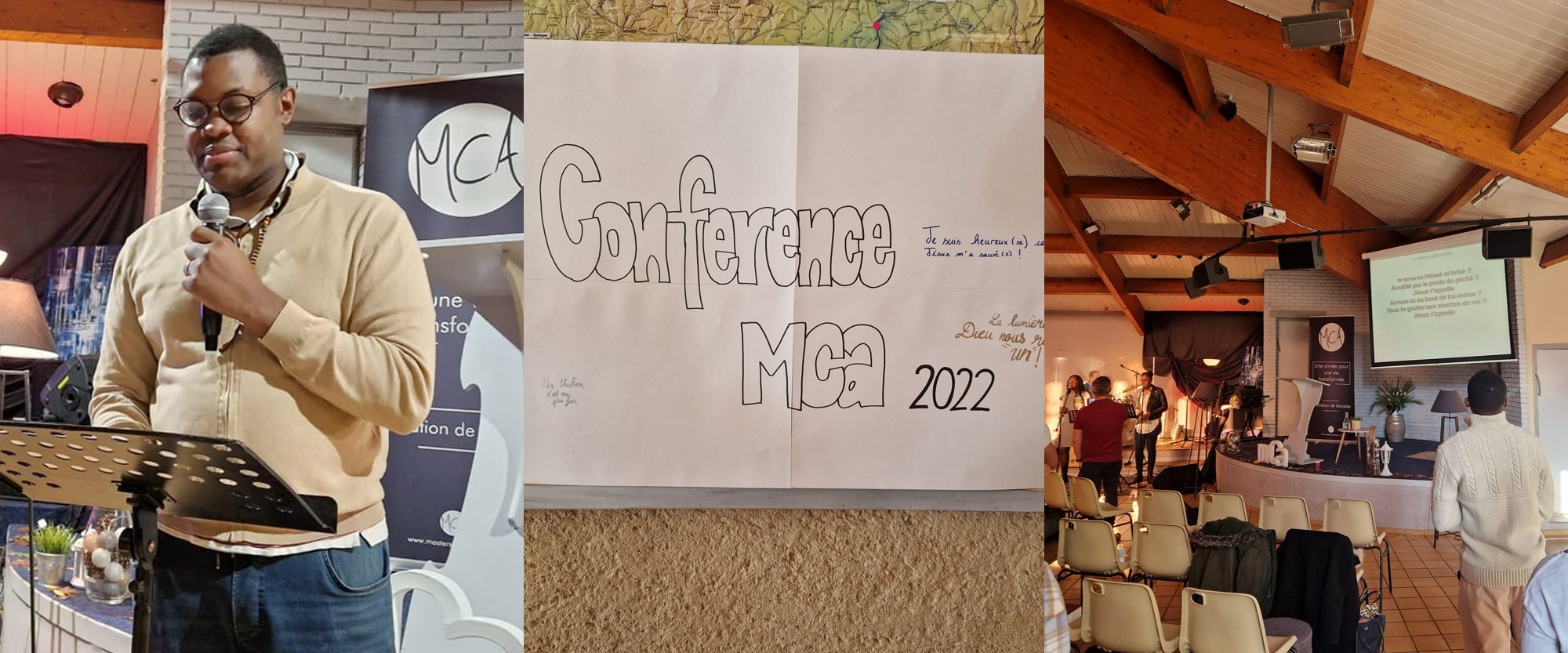
On November 11 and 12 of 2022 I gave four lectures at a conference in France for Master’s Commission Auch. These lectures are a study of four Parables from Jesus to encourage young Christians living in post-Christian Western contexts. They also feature the stories of four well-known believers, two of which are feature in Chris Armstrong’s, Patron Saints for Postmoderns.
To read each lecture, click on the buttons below.